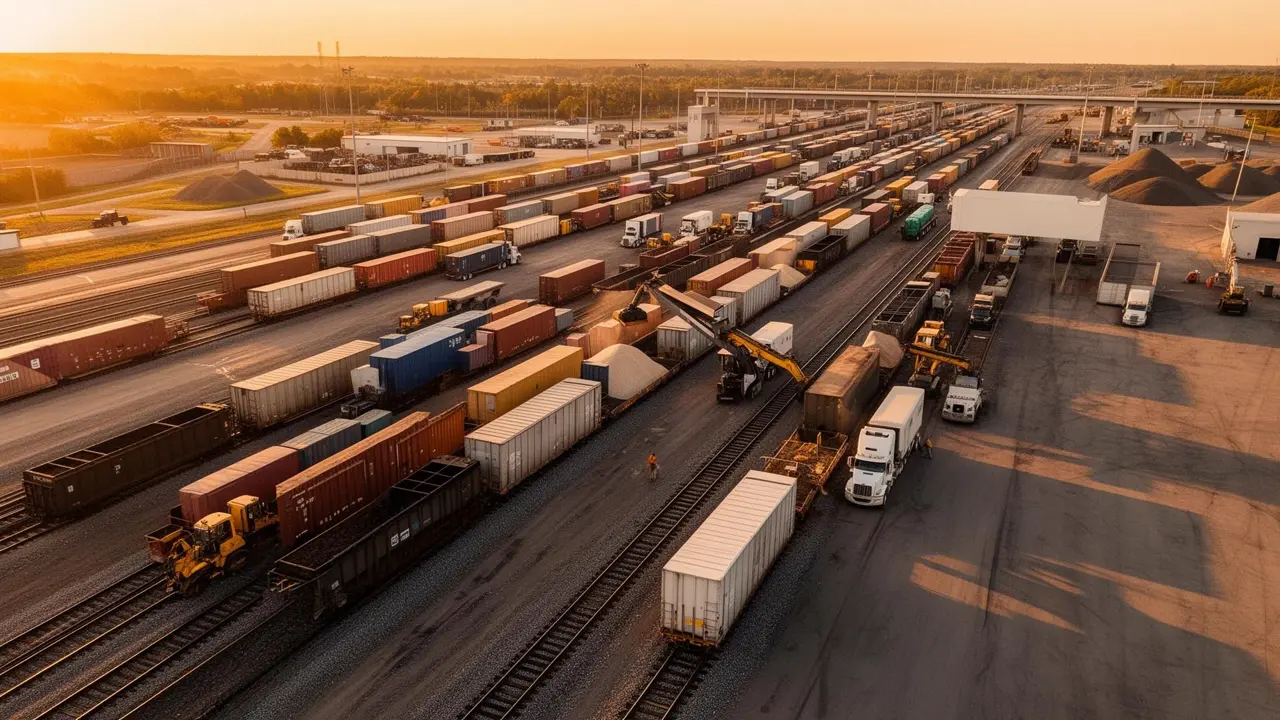
Rail transloading that keep supply chains flowing.
Seamless transloading between rail, truck, and storage — reducing cost and transit time.
Our transloading services bridge the gap between rail and road, enabling efficient commodity transfer for bulk, breakbulk, and containerized cargo. We establish strategically located terminals and experienced operations teams, to minimize handling time, reduce damage risk, and keep your supply chain moving.
By integrating first-mile rail receipt with last-mile truck delivery, we create a continuous logistics chain that eliminates friction at mode transitions. Transloading is not an isolated service — it is a critical node in any integrated rail and industrial ecosystem.
Request a Quote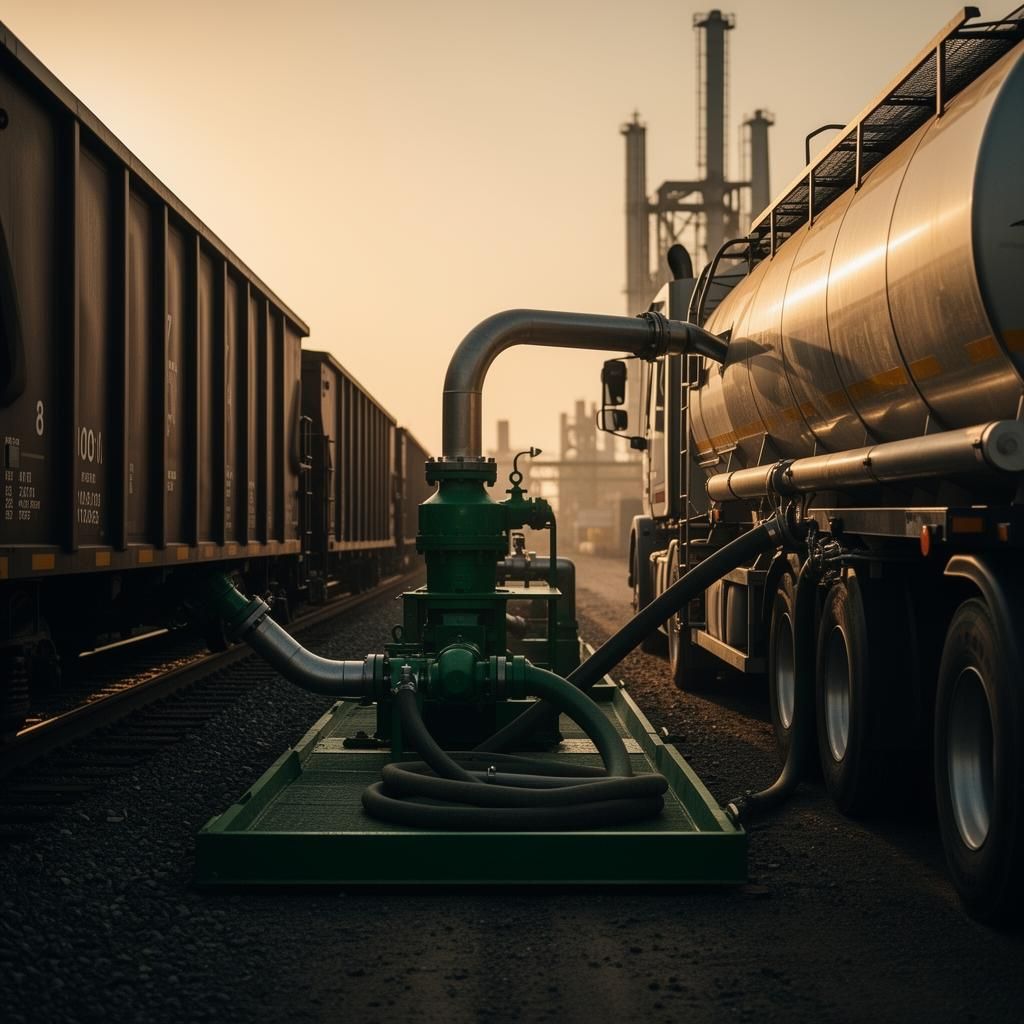
Seamless transfer between modes, handled with care.
Transloading bridges rail and truck, opening markets that lack direct rail access while keeping product moving safely and efficiently.
We manage the connections, equipment, and procedures that make each transfer reliable, compliant, and cost-effective.
Transloading services designed for speed, safety, and integration.
Bulk Commodity Transfer
Efficient transfer of aggregates, minerals, agricultural products, and energy commodities between railcars and trucks. Scalable throughput to match seasonal demand and market cycles.
Rail-to-Truck Transfer
We bridge rail transportation with highway distribution through efficient scheduling, switching, and documentation — minimizing dwell time and getting cargo to its final destination faster.
Container & Breakbulk
Transloading for containerized freight, palletized goods, and oversized breakbulk cargo. Integrated with warehouse and cross-dock facilities for end-to-end distribution.
Weight & Inspection
On-site weighing, sampling (where required) and product inspection during transfer. Accurate documentation ensures compliance, reduces disputes, and protects cargo value.
Fast Turnaround
Optimized terminal layout and equipment allocation deliver rapid loading and unloading cycles. Lower dwell time means lower demurrage and faster asset rotation.
Safety & Compliance
All transloading operations adhere to FRA, OSHA, EPA, and DOT standards. Rigorous safety protocols and trained personnel protect cargo, people, and the environment.
The transloading process in three steps.
Inbound by rail
Bulk or palletized freight arrives at a rail-served facility on the carrier's network, capturing the economics of long-haul rail.
Transfer & store
Product is unloaded, optionally stored or staged, and reconfigured for the next leg — sometimes blended, bagged, or repackaged.
Outbound by truck
Trucks carry the freight the final miles to its destination, giving precise delivery windows where rail can't reach.
One facility connecting rail economics to truck-served markets.
What transloading does for your supply chain.
Lower landed cost
Shifting long-haul miles from truck to rail can meaningfully reduce per-ton freight spend, especially for heavy or bulk commodities.
Rail-served storage
Pairing transload with on-site storage turns a facility into a buffer that smooths demand and protects against supply disruption.
Market reach without a spur
Transloading extends rail economics to shippers and receivers who have no direct rail connection of their own.
Transloading terminals are among the most valuable nodes in our network. Each facility we develop is intentionally positioned to connect active rail lines with industrial parks, storage yards, and highway corridors — creating a logistics hub that attracts tenants, generates recurring revenue, and compounds in value over time.
This integrated model means shippers benefit from shorter drayage distances, faster mode transitions, and the flexibility to route cargo through the most cost-effective path. First-mile rail efficiency combined with last-mile truck precision gives customers a single accountable partner from origin to destination. Investors benefit from diversified revenue streams anchored to the same physical infrastructure. And communities benefit from the jobs and economic activity that flow through a well-run transloading terminal.
Transloading terminals that connect rail, storage, and industrial redevelopment.
Common questions about rail transloading.
What is rail transloading?
OpenClose
Rail transloading is the process of transferring freight between railcars and another mode of transport — most often trucks — at a facility built to handle that transfer. It combines the low cost of rail for the long haul with the flexibility of trucking for local delivery.
What is rail to truck transloading?
OpenClose
Rail to truck transloading is the transfer of freight arriving by rail directly into trucks for final delivery. It lets shippers capture long-haul rail economics while trucks handle the last miles to destinations that have no direct rail connection — ideal for bulk, breakbulk, and palletized freight.
How is transloading different from intermodal?
OpenClose
Intermodal moves a sealed container or trailer across modes without handling the freight inside it. Transloading physically transfers the goods themselves between vehicles, which is necessary for bulk commodities and non-containerized freight that don't travel in standardized boxes.
What kinds of products are transloaded?
OpenClose
Common transloaded freight includes lumber and building products, aggregates and minerals, steel and metals, plastics and resins, agricultural products, chemicals, and palletized consumer goods — essentially anything that benefits from rail's long-haul economics but needs trucks for final delivery.
Do I need my own rail spur to use transloading?
OpenClose
No. The main advantage of transloading is that it extends rail economics to shippers and receivers who have no direct rail connection. You ship to or from a rail-served transload facility, and trucks bridge the gap to your door.
How does transloading reduce freight costs?
OpenClose
Rail is generally far cheaper than trucking on a per-ton-mile basis for long distances. By carrying freight most of the way by rail and using trucks only for the final miles, transloading lowers total landed cost — often substantially for heavy or bulk loads.
Need a rail-served transload solution?
We design and operate transload and storage facilities across North America. Tell us about your freight and we'll help you find the most efficient route.