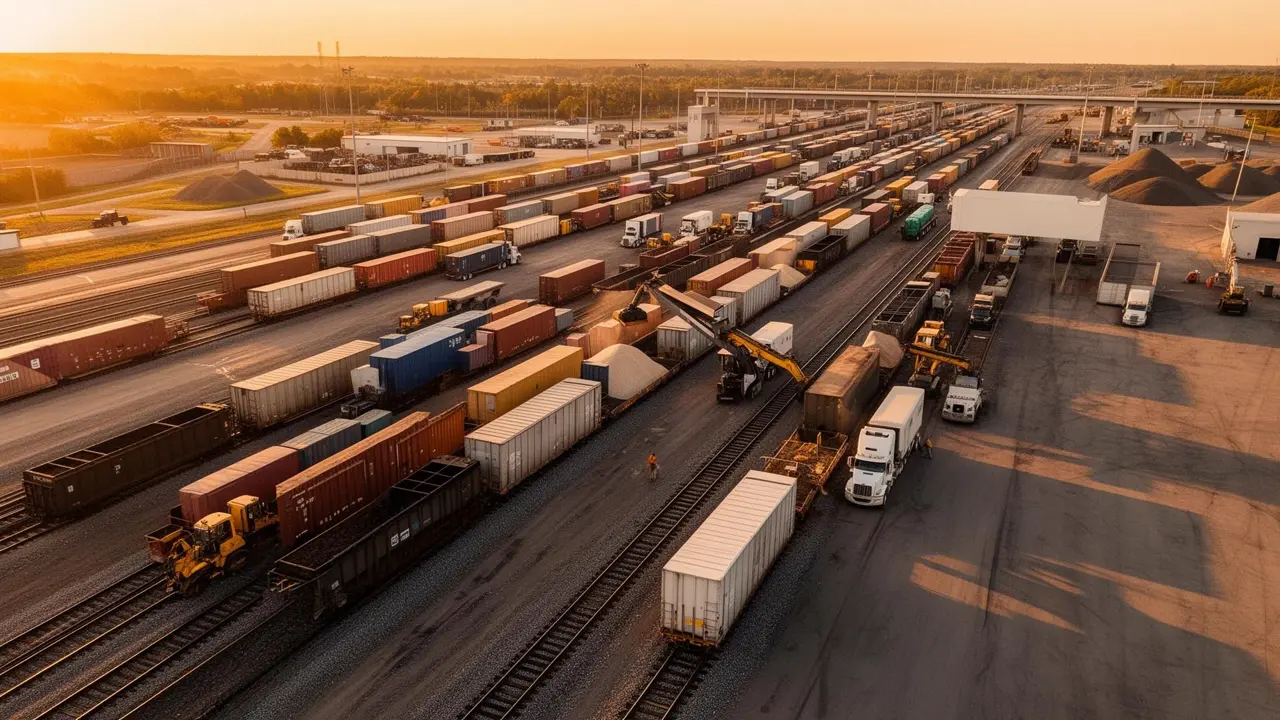
The compounding value of an integrated rail transportation ecosystem.
Standalone logistics facilities are increasingly at a competitive disadvantage. Our view is that the future of value creation in the rail industry belongs to integrated rail-served ecosystems — where transloading, rail car services, storage, and industrial development compound each other's value and create advantages no single-purpose facility can match.
Found this useful? Share it with your network.
Integration is not just efficient — it is the source of durable competitive advantage in rail-served logistics.
For decades, rail transportation was built around single-purpose facilities — a warehouse here, a transload terminal there, a storage yard somewhere else. Each served its function, but none reinforced the others.
That model is being disrupted. Facilities that offer only one of these capabilities are losing share to integrated campuses that offer all three.
Our thesis is that the highest and most durable returns in the rail transportation industry will accrue to owners who build integrated ecosystems — co-locating rail access, rail car services, transloading, storage, and industrial development on connected parcels. Each component attracts customers to the others, diversifies revenue, and creates a logistics moat that standalone competitors cannot replicate.
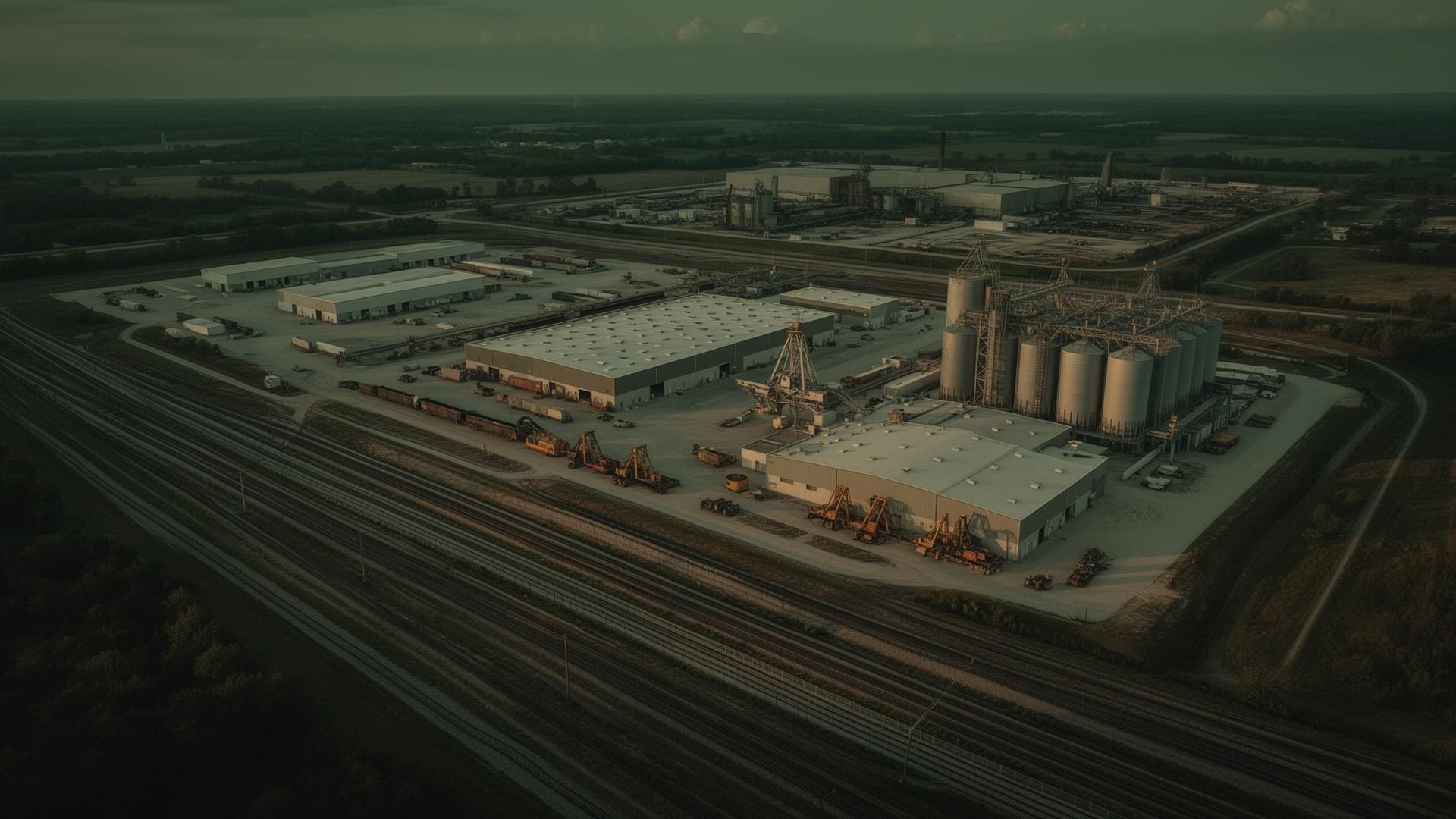
Standalone facilities are giving way to integrated campuses.
The traditional rail services model — where rail, transload, storage, rail car services and distribution each happen at separate facilities — is becoming obsolete.
Facilities that cannot offer this integration face higher costs, longer transit times, and customer attrition. The competitive advantage is shifting decisively toward integrated rail-served campuses.
Six structural advantages of integrated rail-served logistics.
Rail access is the anchor
Direct rail connectivity is the scarce asset that everything else orbits around. It provides cost-efficient long-haul capacity for bulk commodities, reduces trucking exposure, and meets ESG mandates. Once rail is in place, every other service layered on top becomes more valuable.
Transloading bridges modes
Transloading facilities convert railcar quantities into truckload quantities — or vice versa. This allows shippers to optimize each leg of their supply chain by mode, reducing cost and expanding the addressable customer base to those who need flexible, smaller deliveries.
Multiple services create revenue stability
Multiple service offerings generate a diversified and recurring revenue stream. They also smooth demand volatility, providing a defensive revenue base.
Industrial development compounds value
Rail-adjacent industrial land attracts tenants who value direct track access. Each new tenant deepens the economic ecosystem, increases traffic density, and improves the utilization of shared infrastructure — creating a flywheel effect.
Shared infrastructure reduces cost
With multiple service offerings located jointly, the marginal cost of adding each new service or tenant declines. Shared infrastructure drives higher returns on the same capital base.
Customer stickiness is structural
An integrated campus becomes embedded in a shipper's supply chain. Relocating means finding separate providers for rail, transload, storage, and distribution — a costly and complex transition. That stickiness supports pricing power and long-term contracts.
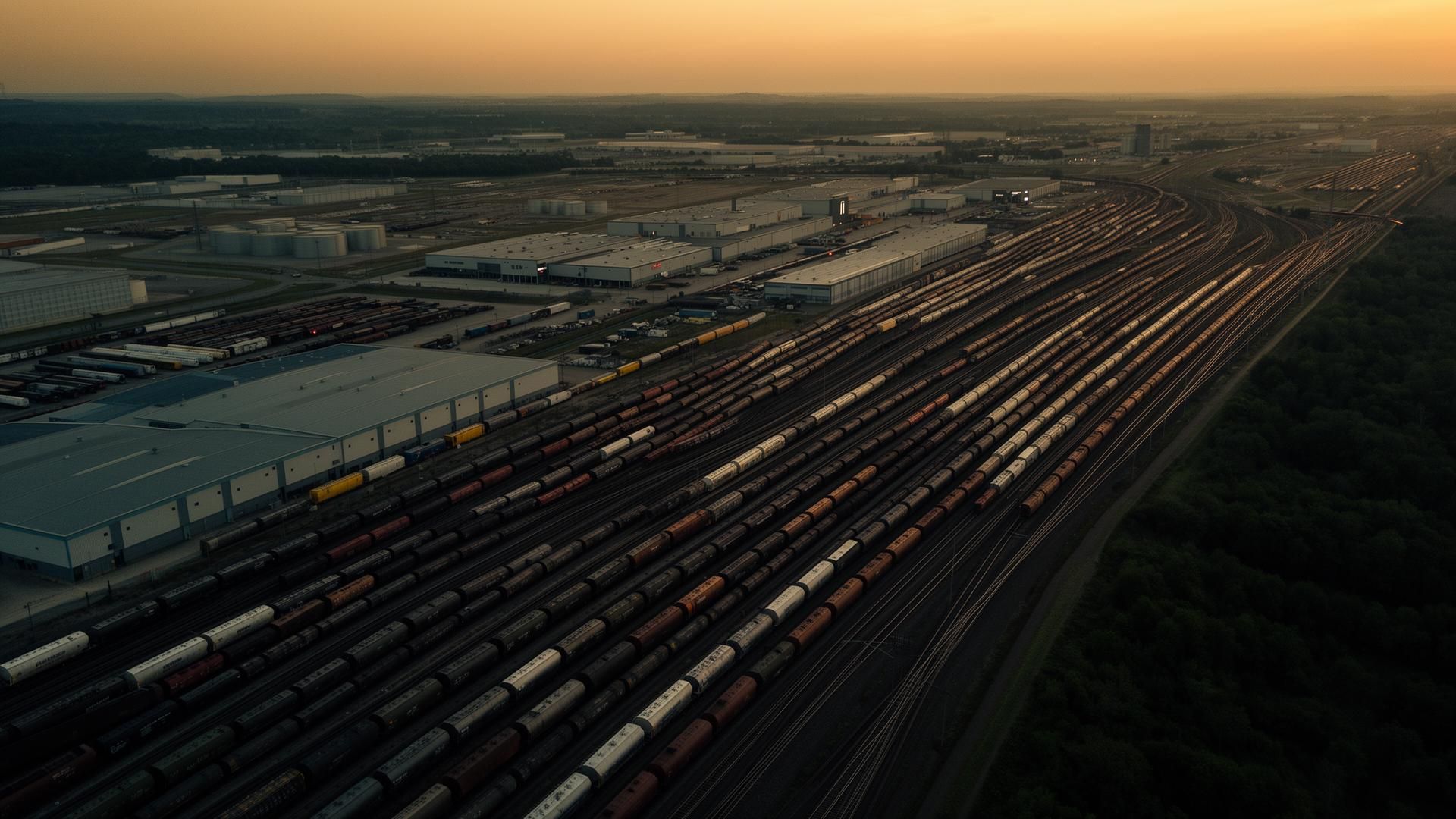
Integrated rail-served campuses are scarce, hard to replicate, and increasingly valuable.
Four revenue streams that reinforce each other in an integrated campus.
Handling & transload fees
Revenue per ton or per carload for transferring material between rail and truck. These fees are typically contractual, inflation-adjusted, and generate immediate cash flow with minimal capital intensity once infrastructure is in place.
Storage & inventory rental
Recurring revenue from storing bulk commodities, finished goods, or railcars on site. Storage contracts provide predictable, long-duration cash flow that anchors the revenue base during cyclical downturns.
Industrial land leases
Revenue from leasing rail-adjacent parcels to industrial tenants who need direct track access. These leases are typically long-term, triple-net structures with annual escalators — producing bond-like cash flow with embedded growth.
Value-added services
Incremental revenue from railcar cleaning, repair, and storage deepen customer relationships, improve facility utilization, and capture margin that would otherwise flow to third-party providers.
Why integration creates a flywheel that standalone facilities cannot match.
Density attracts density
As more shippers and tenants co-locate on a campus, traffic volumes increase. Higher volumes justify infrastructure investment, which attracts even more users — creating a self-reinforcing cycle of growth and value creation.
Cross-selling is organic
A transload customer often needs storage. A storage customer often needs industrial space. An industrial tenant often needs rail access. Integration makes each upsell natural and low-cost, expanding revenue per customer without proportional sales effort.
Risk is diversified by design
A facility dependent on a single commodity or customer is fragile. An integrated campus with multiple revenue streams — handling fees, storage, leases, services — spreads risk across markets, commodities, and tenants.
Integration is the future of rail-served industrial real estate.
The rail transportation landscape is converging. Shippers want fewer vendors, more capabilities, and lower total cost. Investors want diversified revenue, structural customer stickiness, and assets that compound in value over time. An integrated rail-served campus delivers all three.
At Rail-Industrial Partners, we are building this model — acquiring and developing rail-connected assets, layering on transload and storage capabilities, and attracting industrial tenants who value the integrated advantage. The result is an ecosystem where each component reinforces the others, creating lasting value that is greater than the sum of its parts.
How we create valueLet's discuss how to build a rail-served ecosystem.
Our team brings the operations, commercial and capital expertise to help create compounding value.