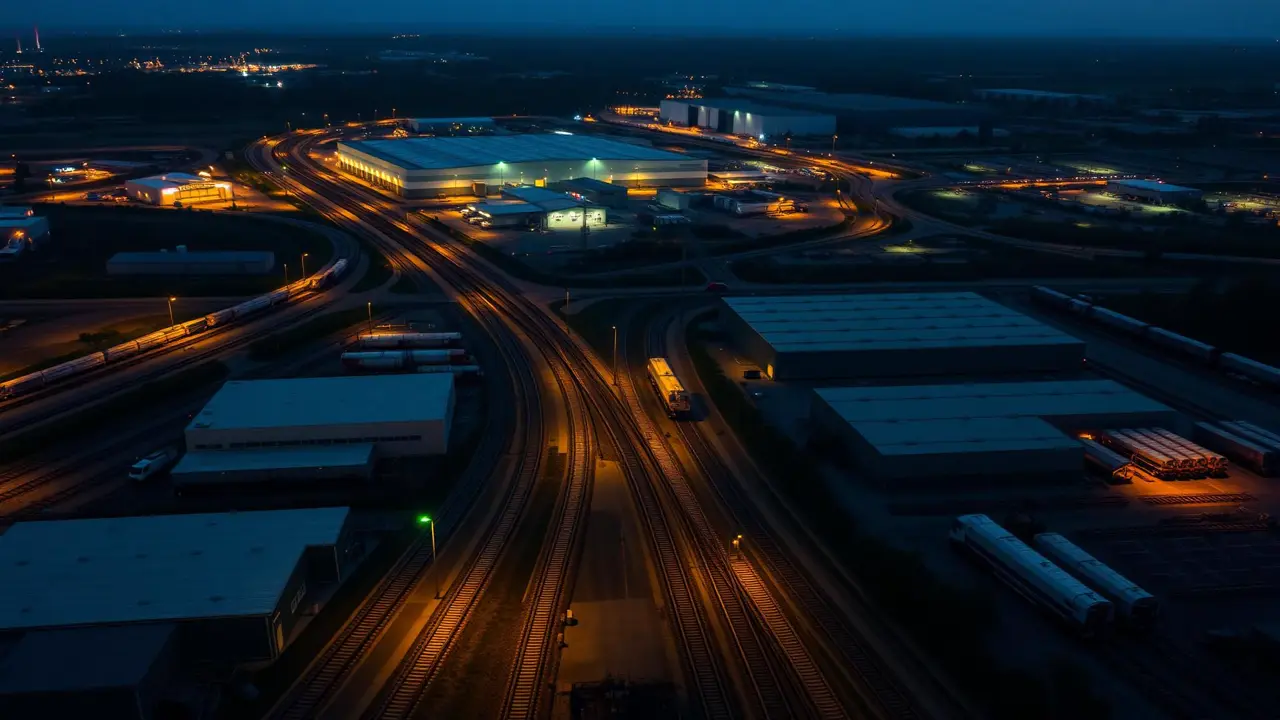
Rail-served industrial site selection.
We help manufacturers, developers, and investors evaluate, select, and develop rail-connected industrial sites to unlock logistics advantages and durable long-term value.
Direct rail access is one of the few logistics advantages a competitor cannot easily replicate.
As supply chains reshore and freight costs stay volatile, direct rail access has become a decisive advantage for manufacturers and distributors of heavy, bulk, and high-volume goods. A rail-served site lets you move freight at a fraction of the per-ton cost of trucking, lock in capacity, and insulate operations from driver shortages and highway congestion.
But not every parcel with a rail line nearby is genuinely rail-served — and not every rail-served site is worth developing. Selecting the right site requires disciplined evaluation of rail connectivity, physical constraints, regulatory exposure, and the economics that determine whether rail access actually pays off. This guide walks through how we approach that evaluation.
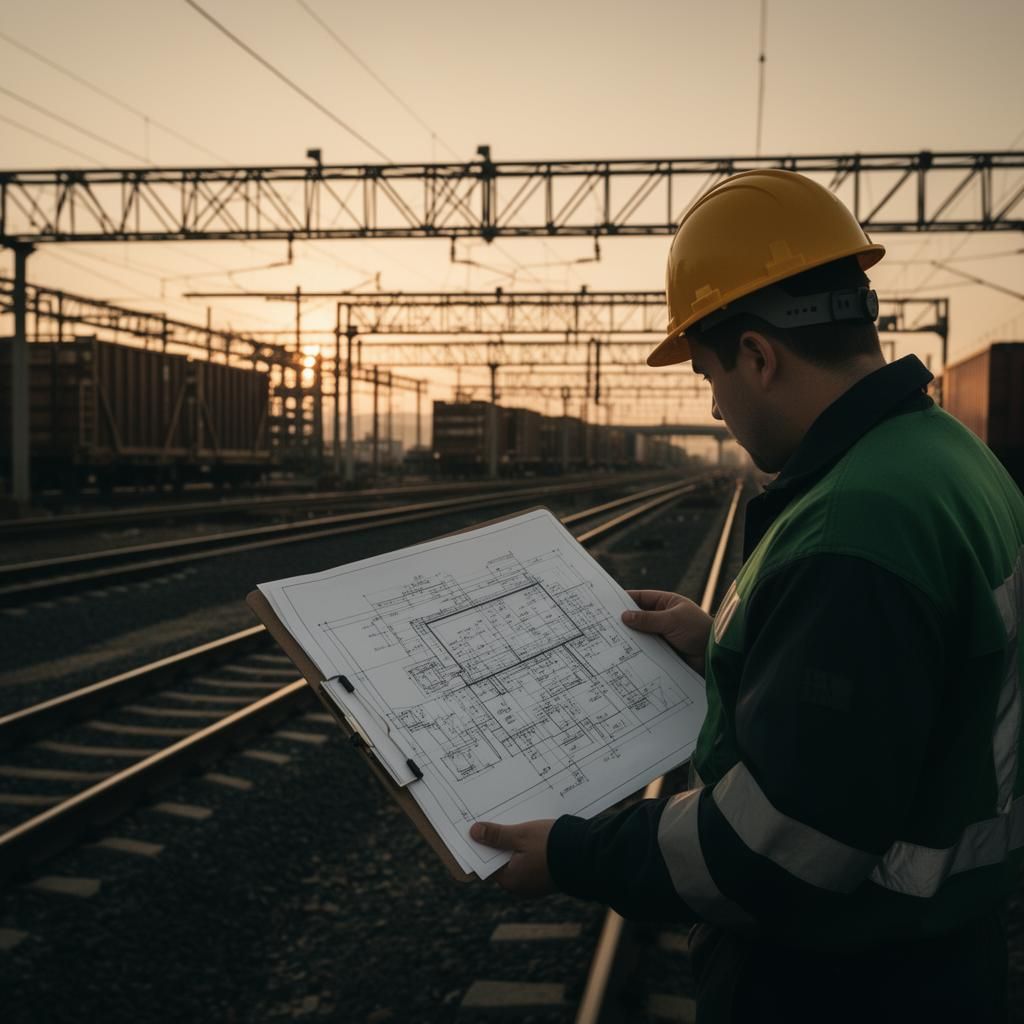
The rail connection determines everything downstream.
Before a site can deliver logistics savings, its rail connection has to be real, reliable, and matched to your freight. That means confirming the serving carrier, switching arrangements, and physical track capacity — not just the presence of a line on a map.
We engage railroads early and design track and facility layouts that prove a site can perform before capital is committed.
Six factors that separate a real rail-served site from a parcel near a railroad.
Rail connectivity & carrier
Confirm whether the site has an active spur, is rail-adjacent, or requires new track. Identify the serving railroad (Class I vs. shortline), switching arrangements, and reciprocal access to multiple carriers.
Location & market access
Evaluate proximity to suppliers, end markets, ports, and interstate highways. The best rail-served sites sit at the intersection of strong rail economics and efficient last-mile truck distribution.
Site geometry & track capacity
Rail needs room: gentle curves, adequate length for car spotting, and space for storage tracks, loops, and future expansion. Tight or irregular parcels can make a viable spur impossible.
Utilities & entitlements
Power, water, gas, stormwater, and zoning must support industrial use at scale. Confirm entitlements, environmental status, and any permits required before the site can be developed.
Throughput & car volume
Project realistic inbound and outbound car volumes. Railroads set service levels and rates around committed volume, so honest demand forecasting underpins the entire investment case.
Regulatory & environmental risk
Brownfield history, wetlands, grade crossings, and FRA/STB jurisdiction all carry cost and timeline risk. Early diligence prevents surprises that can stall or sink a development.
How rail-served development moves from screening to activation.
Screen & qualify
Start with the market and freight profile, then screen candidate sites for active rail access, serving carrier, and obvious physical or regulatory dealbreakers before spending diligence dollars.
Diligence & design
Engage the railroad early, validate track geometry and capacity, test utilities and entitlements, and model car volumes and rates. A preliminary track and facility layout confirms the site can actually perform.
Develop & activate
Build out spur, storage, transload, and warehouse infrastructure, execute the rail service agreement, and ramp operations — turning a rail-served parcel into a revenue-generating logistics asset.
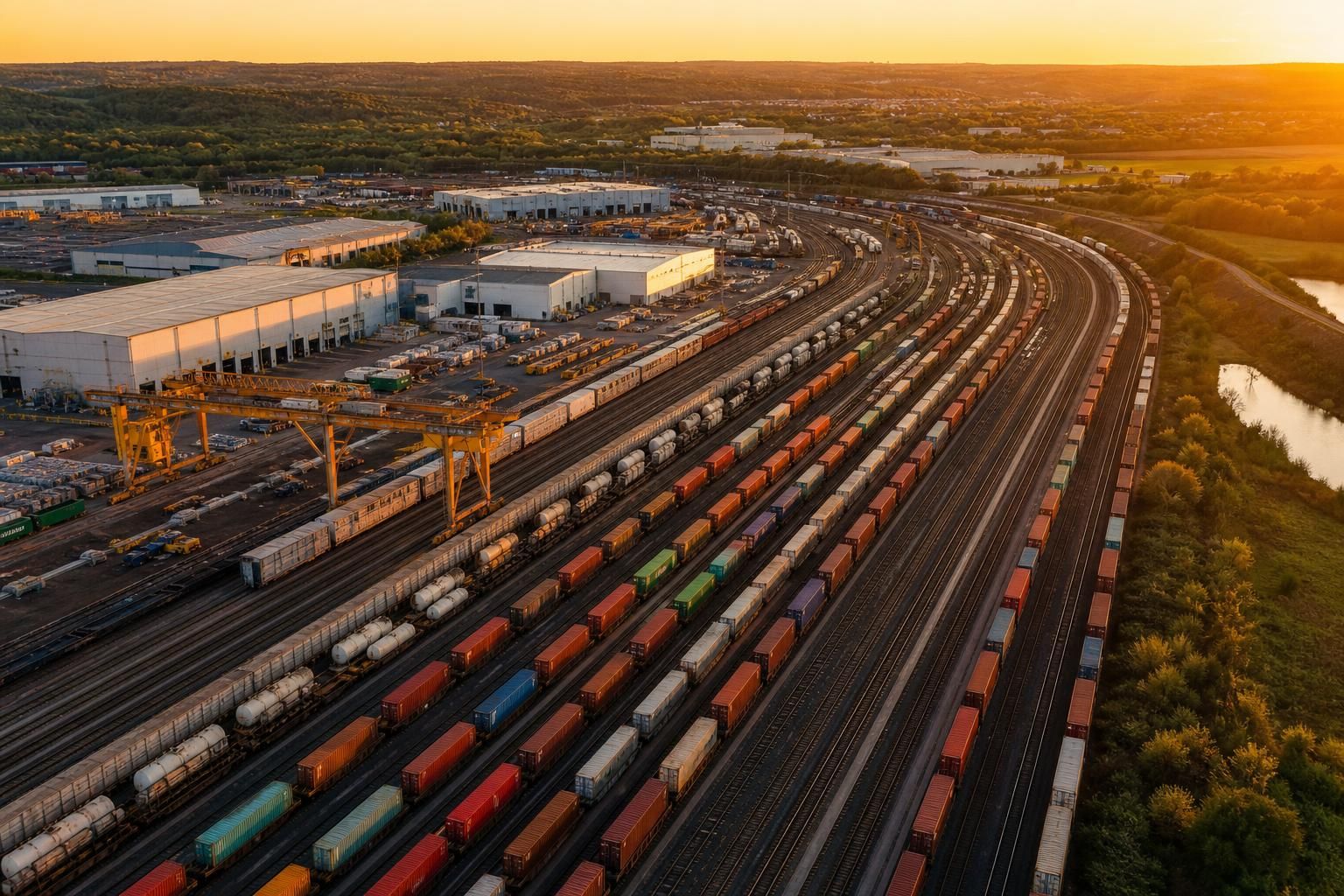
The most valuable sites connect rail, storage, transload, and industrial development in one place.
Why rail-served sites compound in value over time.
Lower landed cost
Rail's per-ton-mile economics cut freight spend on heavy and bulk goods, improving margins and competitiveness for the tenants who occupy the site.
Scarcity-driven value
Rail-served parcels are finite and hard to replicate. That scarcity supports premium rents, lower vacancy, and resilient long-term asset appreciation.
Integrated logistics hub
Pairing rail with transload, storage, and warehousing turns a single site into a logistics ecosystem that attracts anchor tenants and diversifies revenue.
Common questions about rail-served site selection.
What does 'rail-served' actually mean?
OpenClose
A rail-served site has direct, active rail access — typically a spur or siding connected to a serving railroad — so railcars can be spotted and pulled at the property itself. This is different from a 'rail-adjacent' site that is near a line but has no physical connection, which would require building new track to become truly rail-served.
How do I know which railroad will serve a site?
OpenClose
The serving carrier is determined by which railroad owns or operates the line connected to the site. It may be a Class I railroad or a regional/shortline operator, and some sites have reciprocal switching that provides access to multiple carriers. Confirming the serving railroad early is essential because it drives service levels, rates, and switching arrangements.
What freight volume justifies a rail-served site?
OpenClose
There is no universal threshold, but railroads structure service and pricing around committed car volume. Heavy, bulk, or high-volume commodities — aggregates, metals, plastics, agricultural products, building materials — most often justify rail. A realistic forecast of inbound and outbound carloads is the foundation of any rail-served investment case.
Can a site without an existing spur become rail-served?
OpenClose
Yes, if the site is rail-adjacent and the geometry, capacity, and carrier cooperation support a new connection. Building a spur requires engineering review, railroad approval, and capital investment, so it must be weighed against projected volumes and the long-term value the rail access creates.
What are the biggest risks in rail-served site selection?
OpenClose
Common pitfalls include overestimating freight volume, underestimating track geometry and capacity needs, missing environmental or brownfield issues, and assuming carrier service that hasn't been confirmed. Disciplined early diligence across connectivity, physical constraints, utilities, and regulatory exposure is what prevents costly surprises.
Let's assess your rail-served opportunity.
Whether you're scouting a parcel, evaluating an acquisition, or planning a development, our team can help you judge rail access, capacity, and long-term value.